
Lead Nurturing Automation: How It Works and How to Set One Up
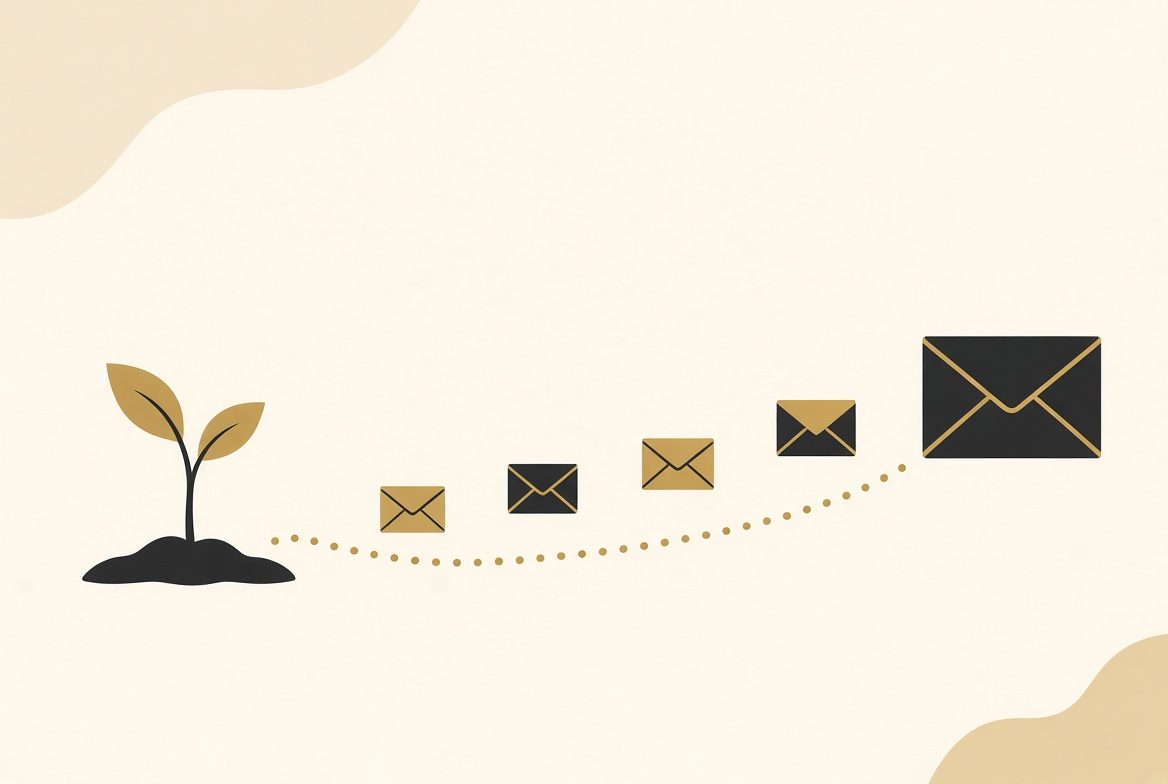
Lead nurturing automation is a sequence of scheduled, triggered messages — usually email, sometimes SMS or WhatsApp — sent automatically to a lead over days or weeks after they've shown interest but before they're ready to buy. The point is simple: most leads aren't ready to buy the day they first contact you, and without a system, they quietly get forgotten the moment your attention moves to whoever enquired today.
This guide covers how a nurture sequence actually works, a starting structure you can adapt, the mistakes that make it feel like spam, and what properly sourced data shows about it — not the recycled statistics that show up on almost every other page about this topic.
About those statistics
Search for "lead nurturing statistics" and you'll find the same numbers on dozens of sites: a 451% increase in qualified leads, 47% larger purchases from nurtured leads, 50% more sales-ready leads at 33% lower cost. Nearly all of them trace back to the same handful of marketing blog posts from the early 2010s, citing vague, undated sources like "Annuitas Group" or "Gartner Research" with no link to an actual study anyone can check. We couldn't verify the originals, so we're not repeating them here. If you see those exact figures elsewhere, that's where they came from.
One number we could verify: Klaviyo's own 2026 benchmark report, built from data across roughly 183,000 of its customer accounts, found automated email flows average a 5.58% click rate against 1.69% for one-off campaign emails — more than three times higher (Klaviyo, 2026 Email Benchmarks). That data set is weighted toward ecommerce brands, not service businesses, so treat it as directional, not a guarantee for your industry. What it does support is the basic logic: a relevant, well-timed automatic message tends to get a better response than a generic one-off send.
How it differs from spam
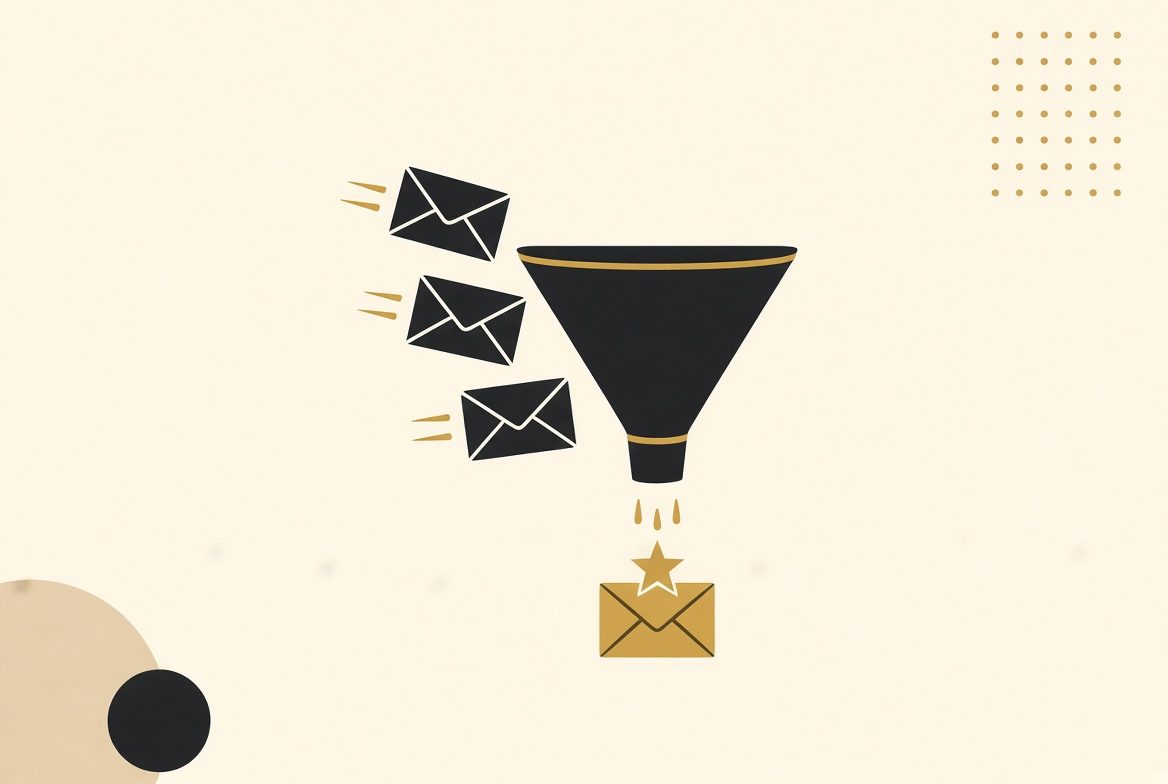
The difference isn't automation. It's relevance and an exit. A good sequence is triggered by something the lead actually did (filled a form, viewed a pricing page, went quiet after an initial reply), says something useful in every message, and stops the moment a real conversation starts. A bad one sends the same five emails to everyone regardless of what they did, has nothing to say beyond "just checking in," and keeps going even after the person has already replied or bought — which is the single fastest way to make automation look careless.
The building blocks
- Trigger. What starts the sequence: a form submission, a specific page visit, or no reply after a set number of days.
- Segment. Not every lead gets the same sequence. Someone who asked for a quote is further along than someone who downloaded a guide, and treating them identically wastes the urgency of the first and annoys the second.
- Channel. Email is the default. SMS or WhatsApp can work for time-sensitive or local businesses, but with a higher bar for relevance since they're more intrusive.
- Cadence. How far apart the messages land. Front-load it: the first follow-up matters more than the fifth.
- Content per step. Each message should do one job — answer a likely question, show relevant proof, or make it easy to take the next step. "Just checking in" isn't a job.
- Stop condition. A reply, a booked call, a purchase, or an unsubscribe should end the sequence immediately. This is the part most DIY setups get wrong.
A starter sequence
This is a starting structure to adapt, not a template to copy exactly — the right cadence depends on your sales cycle.
| Day | Message | Purpose |
|---|---|---|
| 0 | Acknowledge the enquiry and answer the obvious first question | Confirm you got it, reduce uncertainty |
| 2–3 | Something genuinely useful related to what they asked about | Give value before you ask for anything |
| 6–7 | A specific, real example of relevant work | Build credibility without a hard pitch |
| 10–14 | A direct, low-pressure check-in with a clear next step | Make it easy to say yes or no |
| After day 14 | Move to an occasional list, or stop | Avoid nagging someone who isn't ready |
Keep each message short. The goal of every step is a reply, not a read.
Common mistakes
- No stop condition. Automation that keeps emailing someone who already booked a call is the clearest sign a business isn't paying attention.
- Content with nothing in it. A message that only says "wanted to follow up" gives the reader no reason to respond.
- One sequence for every lead. A hot, ready-to-buy enquiry and a casual browser need different pacing and different content.
- No easy way out. A visible, working unsubscribe or opt-out isn't just good manners — in the EU, UK and most of the US, it's a legal requirement for marketing email (see below).
- Starting the nurture instead of a fast reply. Automation handles the ongoing follow-up. It doesn't replace a fast first response — see our guide to speed to lead for that part.
A note on consent and compliance
Rules differ by region and this isn't legal advice, but the general shape is consistent: in the EU and UK, marketing email generally requires consent and a working unsubscribe option under GDPR and PECR; in the US, CAN-SPAM requires accurate sender information, no misleading subject lines, and a working opt-out honoured promptly. If you nurture leads across these markets, check what applies to you before sending at scale.
Build options
This can be built with a no-code automation tool (Make, Zapier, n8n) connected to whatever email tool you already use, or with the native automation feature built into most CRM and email platforms. The platform matters less than the design: a clear trigger, real segmentation, and a stop condition that actually stops.
How Corevalo approaches this
The Business Automation service connects the tools you already use so that leads, follow-ups, and reporting happen automatically. Segmenting leads before they enter a nurture sequence is exactly what the AI lead qualification approach is for — scoring and routing each enquiry so a hot lead and a casual one don't get treated the same way. You can see one version of that scoring and response workflow on the Work page.
Frequently asked questions
How many emails should a nurture sequence have?
However many it takes to either get a response or reasonably conclude the person isn't ready yet. Three to five is a common range, not a rule.
Does this replace a salesperson following up personally?
No. It handles the leads who'd otherwise be forgotten between personal follow-ups, and it should stop the moment a real conversation starts.
Is lead nurturing only for B2B?
No, though the data available on it skews toward ecommerce and B2B software. The underlying logic — don't let an interested person go cold through simple neglect — applies to most service businesses too.
Want help setting this up?
Book a call and we'll map out what a nurture sequence should look like for how your leads actually arrive.